
Radio Free Belfast broadcast 1969-1970.
This tape recorder was used to record the 24/7 live transmissions from the Pirate Radio Station Radio Free Belfast manned by Civil Rights and People’s Democracy members during 1969-70. A life line for the people behind the Barricades.These informative transmissions were mixed with humorous tongue and cheek Political Statements, Traditional Music Requests, Rent Strikes, Army Curfews and RUC Raids.
Written by Vincent Dargan, private collector
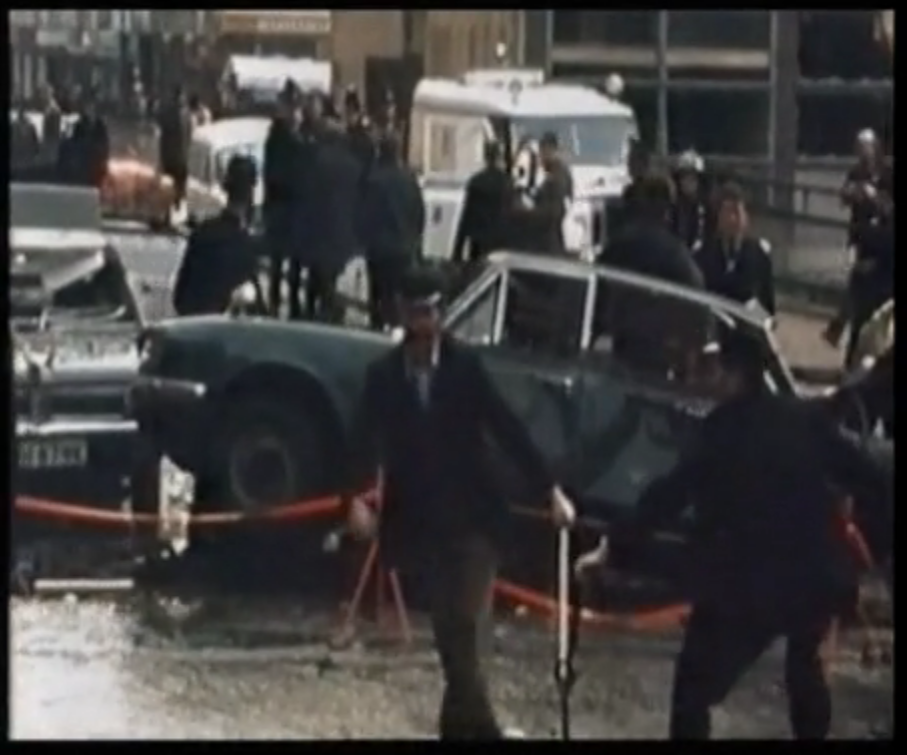
Stills captured from film clips of incidents from the Troubles edited by Peter Heathwood, 1970s – 1990s
These film clips of incidents from the Troubles show the everyday object, namely, a car, van or lorry used for the purposes of war. The incidents used cover all parts of Northern Ireland, London, and Manchester.
Written by Peter Heathwood, private collector
*None of these clips show incidents where anyone was killed or seriously injured.




Everyday Objects Transformed by the Conflict – option 1 (portfolio)
Everyday Objects
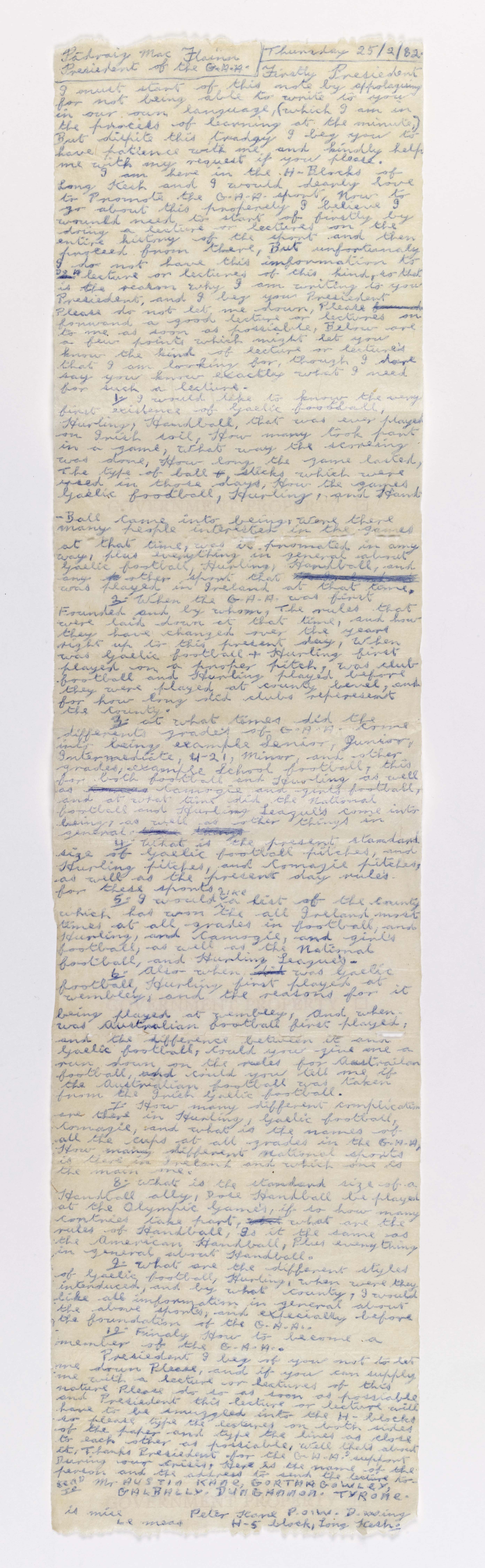
Prison ‘Comm’ toilet tissue
During the conflict prisoners exchanged communications with those outside of the prison via letters which were monitored by the prison
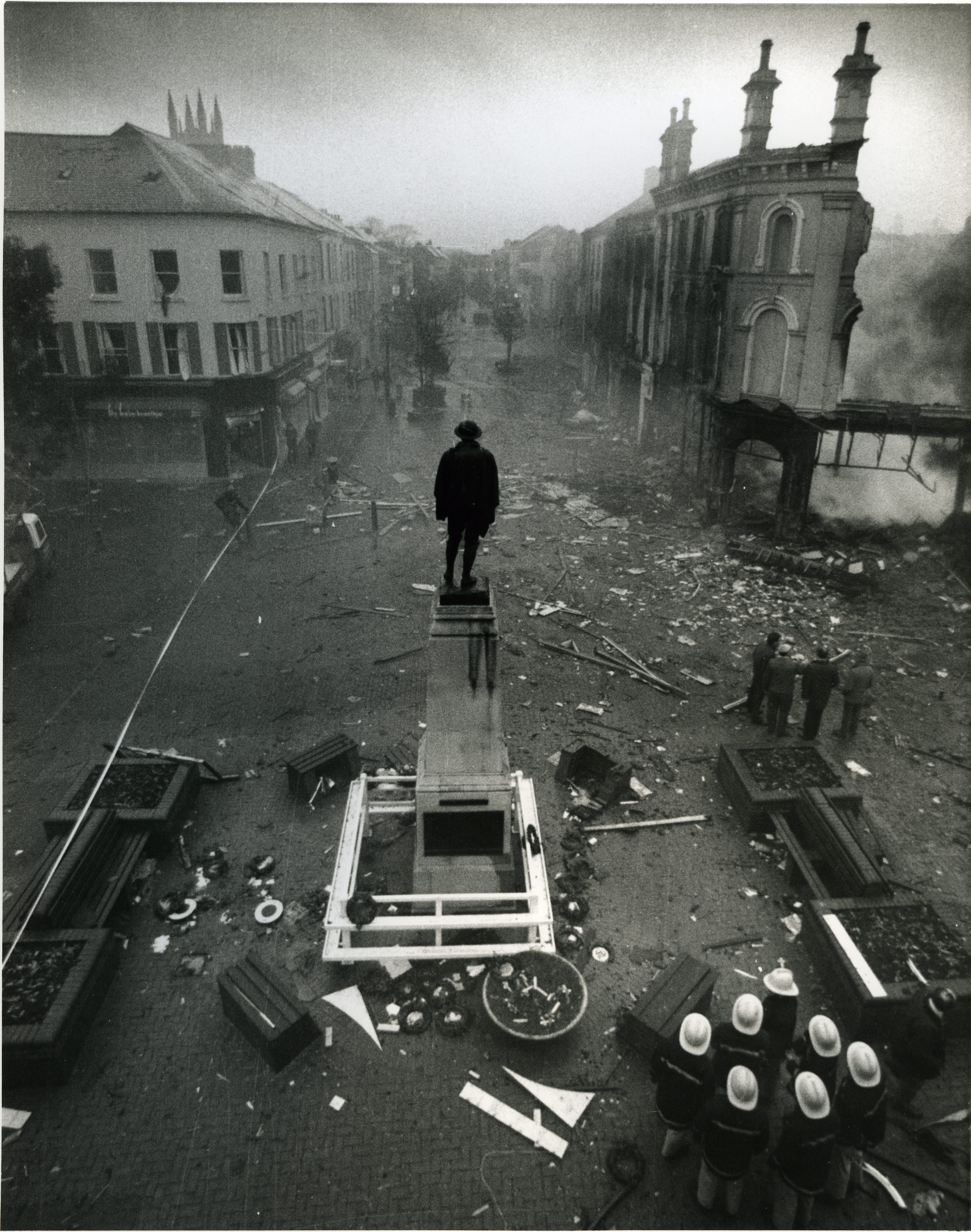
Friday the Thirteenth photograph by Seamus Loughrey
Friday the Thirteenth. November 1992. A windy night. A deserted Diamond. A blue Toyota van erupts. The heart of Coleraine
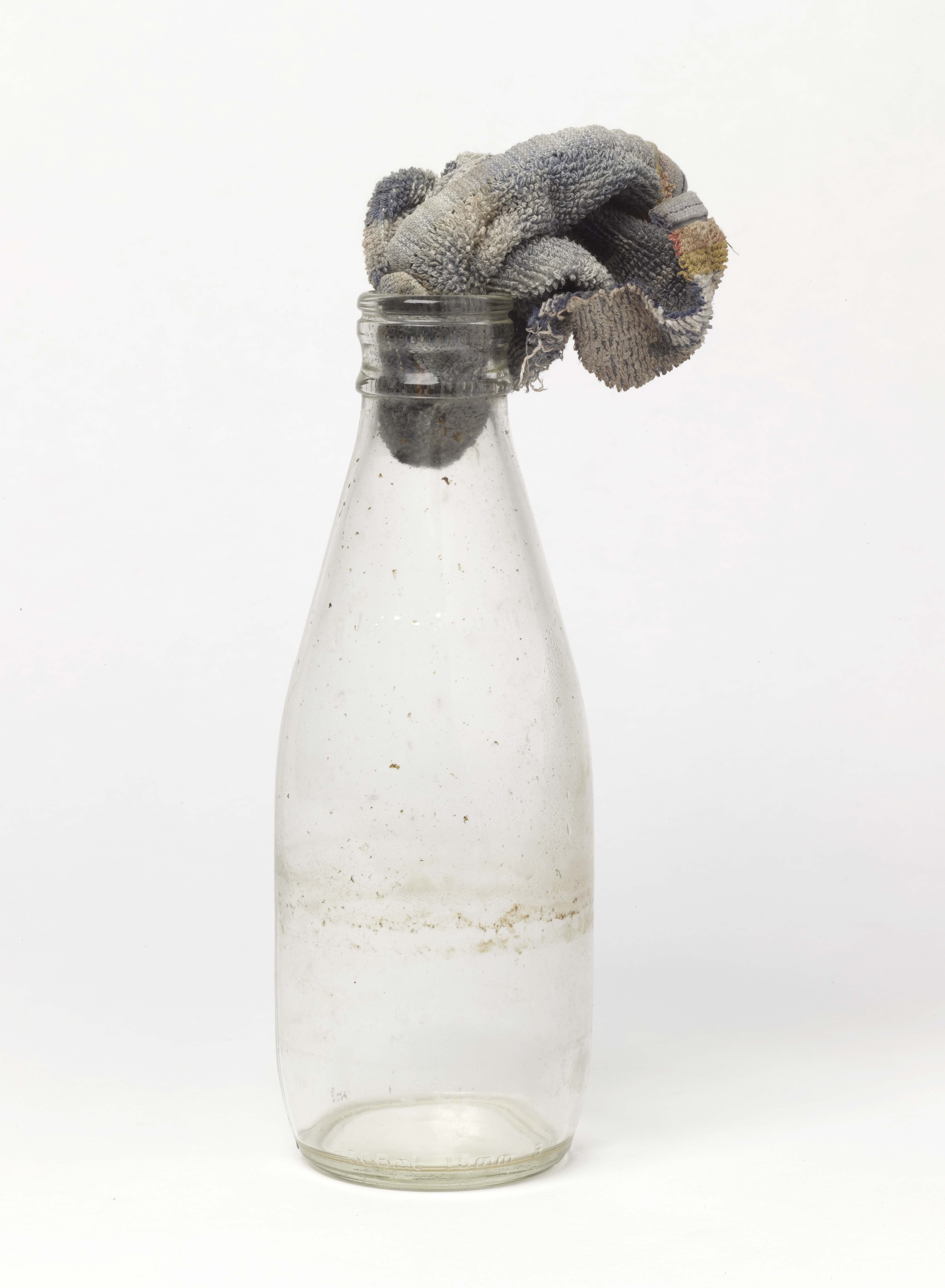
Milk bottle used as petrol bomb
The glass milk bottle that was in everyone’s home became a symbol of resistance – the petrol bomb – which
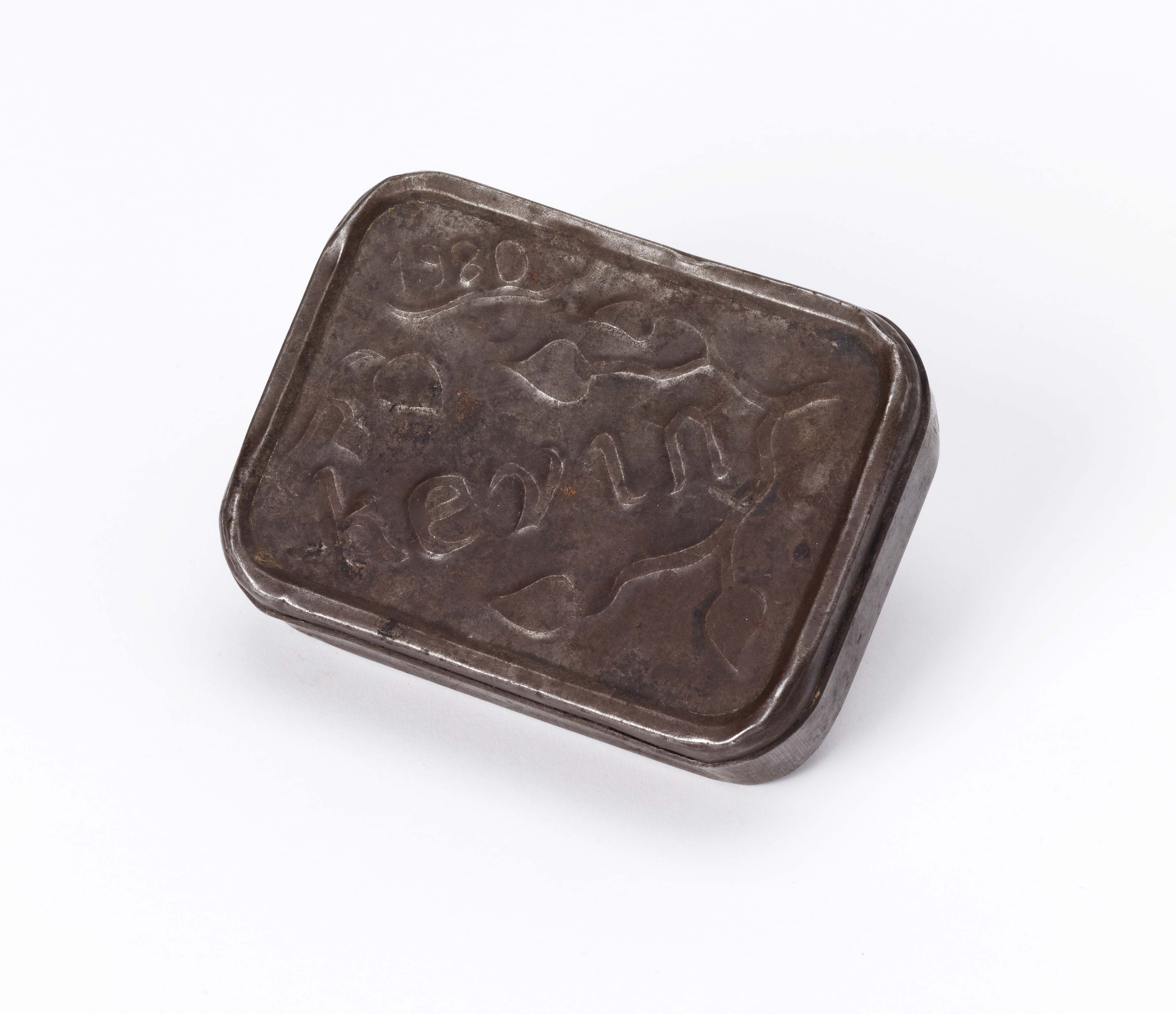
Tobacco tin
This Tin was designed in C Wing in Crumlin Road Prison in 1980 when the Prisoner was on Remand. Handicrafts

Willie Doherty, Border Incident, 1994
Willie Doherty’s photographs, films and installations address problems of representation, territoriality, surveillance and the language of identity, often focusing on
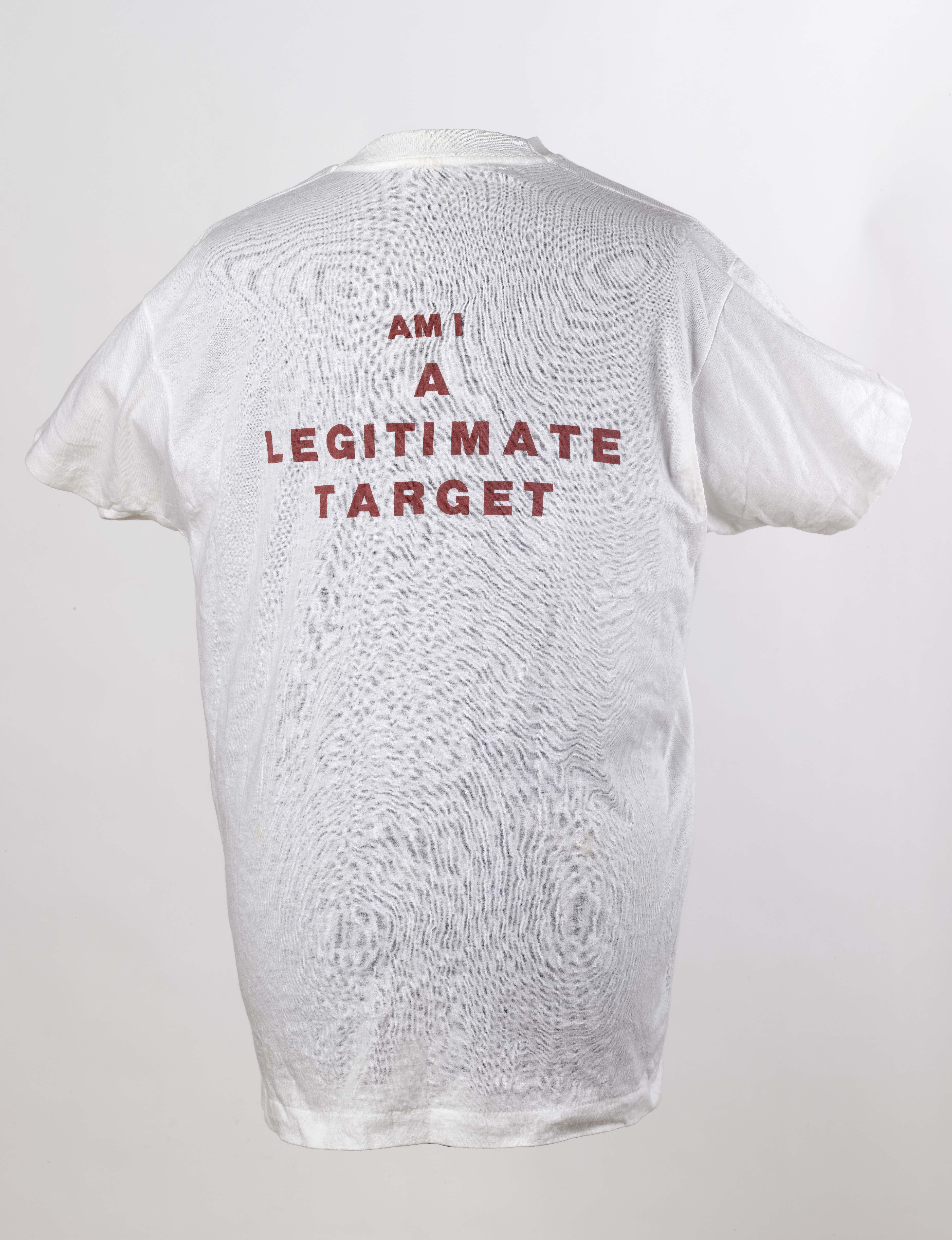
‘Am I a legitimate target’ t-shirt
During the Troubles republican groups had the stated policy of attacking 'legitimate targets' and, while not explicit, this would have
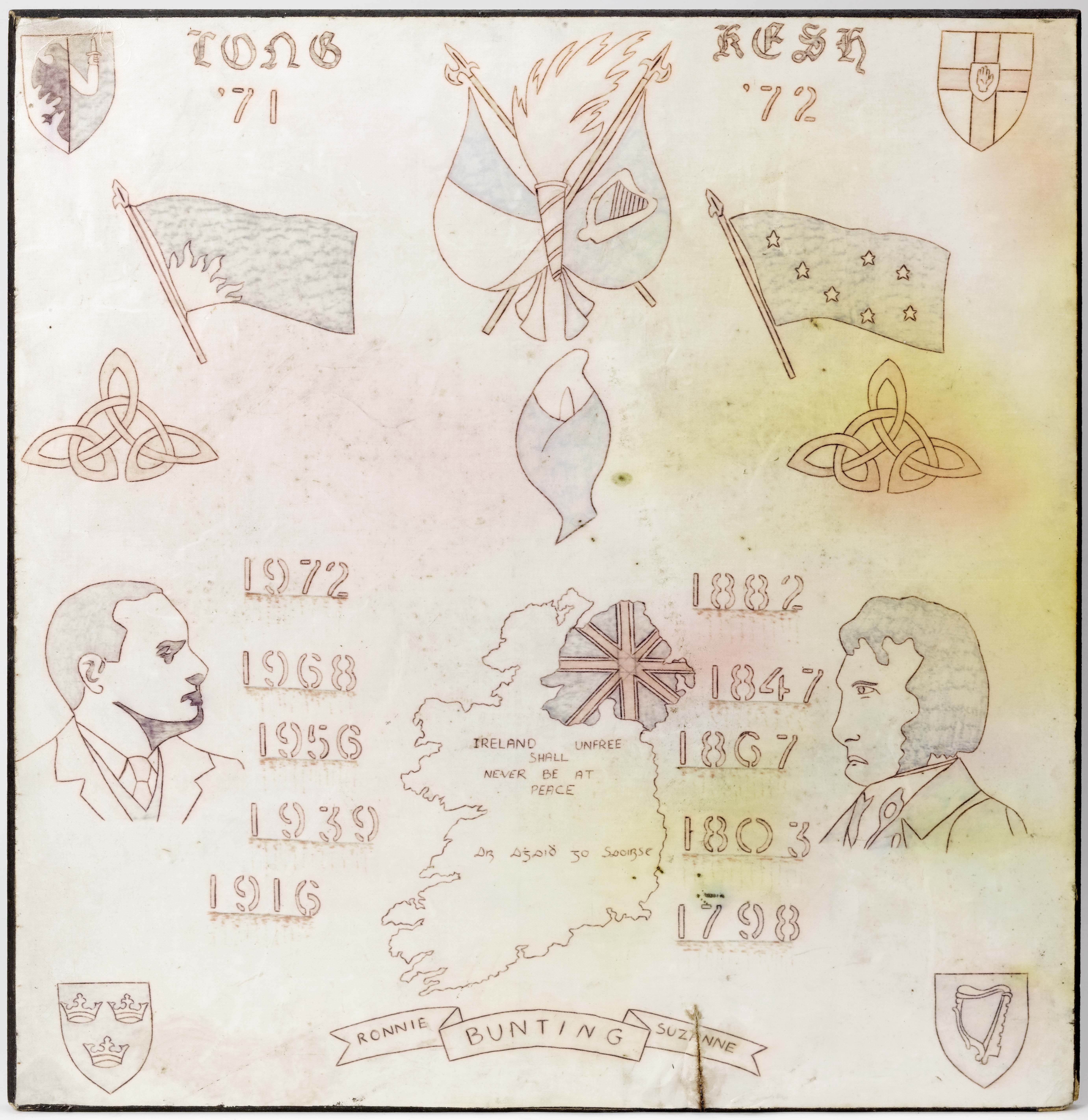
Designed hanky
This hand drawn Hanky was made in the cages of Long Kesh during Internment in the early seventies. It was
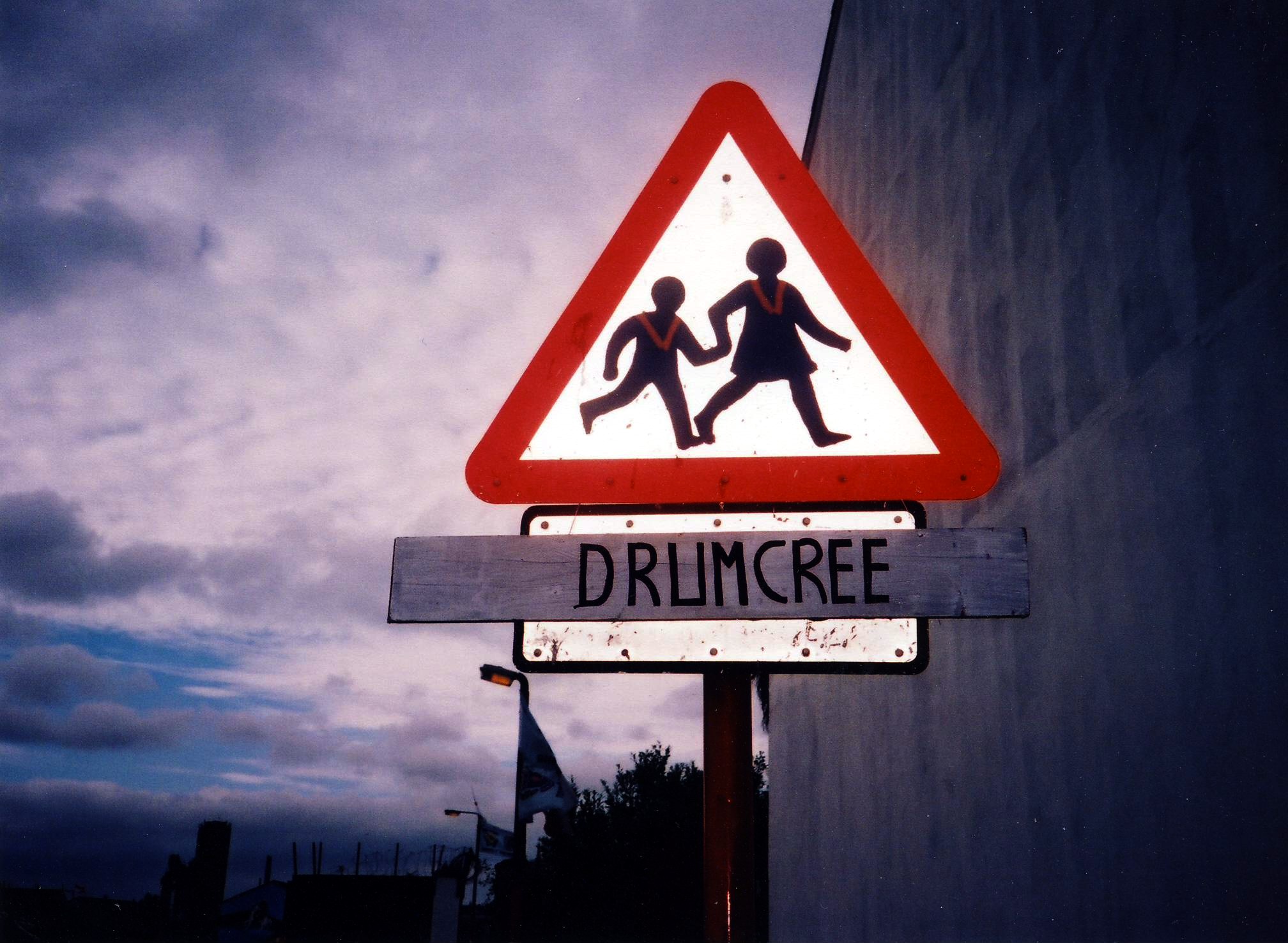
Photograph of subverted school patrol sign at Hopewell Crescent, Shankill, Belfast, July 2000
Fresh murals and flags proliferated on the Lower Shankill in the early summer. In their midst, this school patrol sign
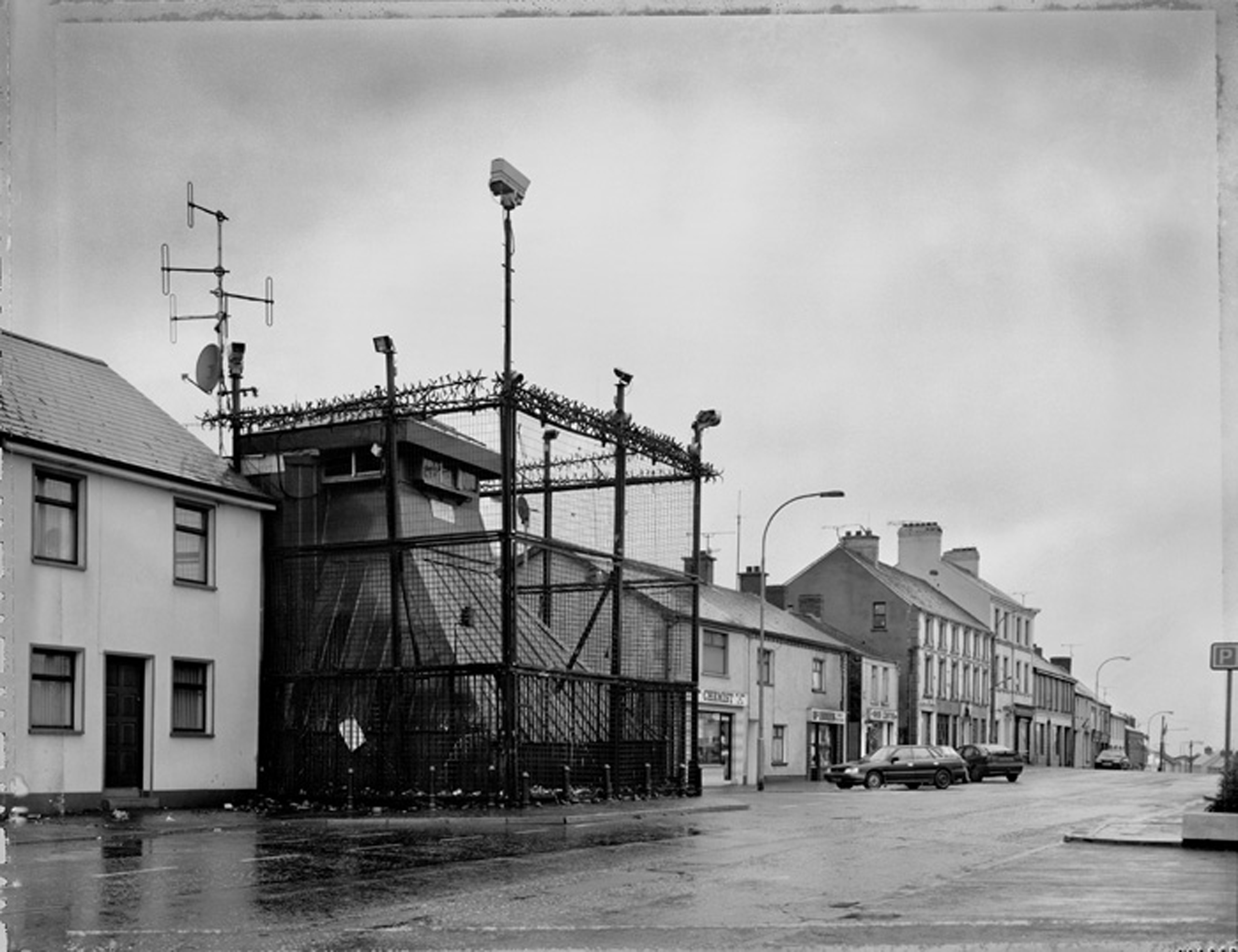
Golf Five Zero watchtower. Crossmaglen, South Armagh, Northern Ireland, UK.
A military building forming part of the British Army's defensive strategy to control the landscape and people of Northern Ireland
Everyday Objects Transformed by the Conflict – option 2 (masonry)

Monaghan courthouse, Church square 21/05/1981 from Donal McEnroe collection
After a fire on the 14/05/81; the Courthouse lay empty and unused for a number of years. Church Square was and still is a natural gathering place for public events, entertainment and sometimes protests in Monaghan town. H Block was a common name for the Maze Prison that became infamous for the 1981 hunger strikes.
Label written by Theresa Loftus from Monaghan County Museum.
Label written by Theresa Loftus from Monaghan County Museum.
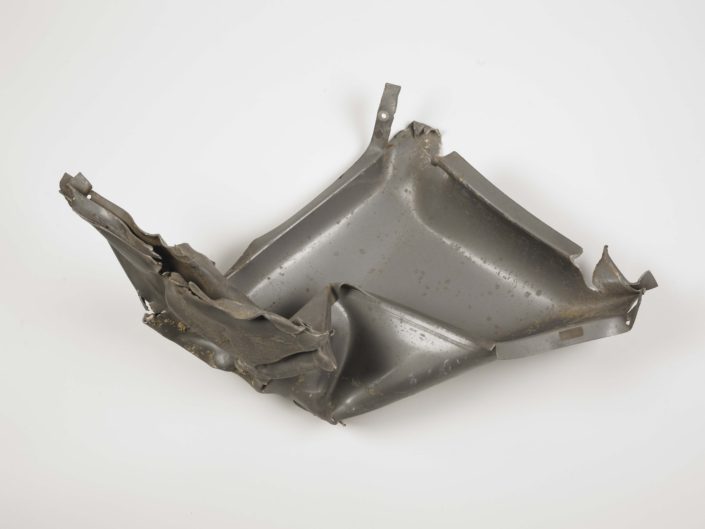
Post Office Tower fragment, c. 1965
This fragment of London’s Post Office Tower was blown off by the Provisional IRA bomb of 31 October 1971. The bomb forced the Tower to close to the general public. The metal was recovered from the site in the aftermath of the explosion by Edward Fennessy, Director of Post Office Telecommunications Research, who kept it as a memento.
Label written by Jim Gledhill from Museum of London.
Label written by Jim Gledhill from Museum of London.
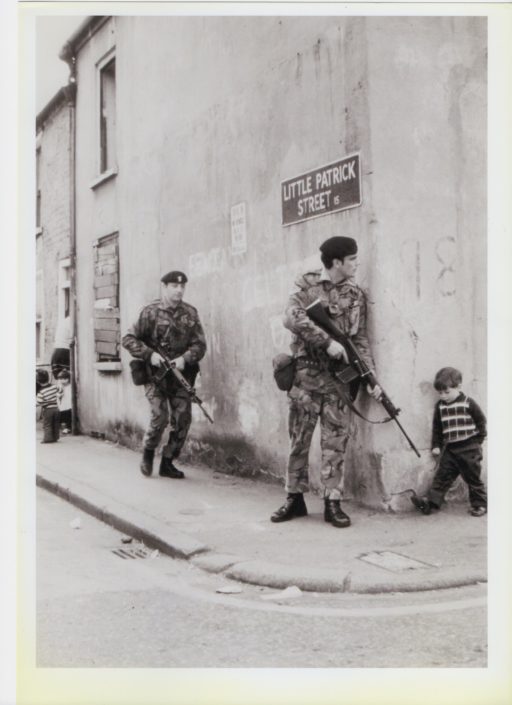
On Patrol in Little Patrick Street, Belfast, circa 1973
This is everyday life in Belfast in the 1970s. A little boy's normal stroll to meet his friends. Just around the corner, a British soldier not knowing what's lurking on the other side. For most British soldiers, serving in Northern Ireland meant living in constant fear of a sniper attack as it was difficult to know friend from foe.
Label written by Dr Alistair Massie from National Army Museum.
Label written by Dr Alistair Massie from National Army Museum.

Photograph of British army dismantling a barricade made of street paving slabs, 1969
There were many casualties of the sectarian violence in Belfast in September 1969. Lives were lost, hundreds were injured, property was destroyed, communities were divided, and childhoods were shattered. This photo captured a camera crew filming the British army dismantling a barricade made of street paving slabs, before rioting broke out. A traumatised little girl stands posed for the photographer.
Label written by Elizabeth M. Kirwan from National Photographic Archive.
Label written by Elizabeth M. Kirwan from National Photographic Archive.
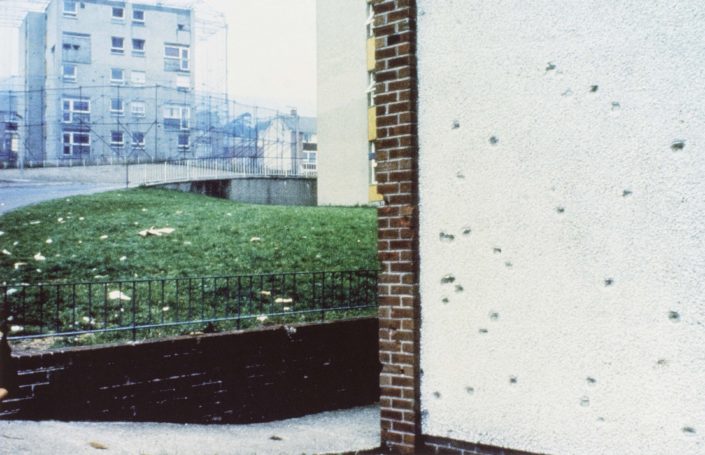
Image of gable end wall with bullet holes, Lenadoon, Belfast circa 1973
The civil disturbances of the late 1960s gave way to serious violence. Thousands of homes suffered damage and destruction from rioting and bombing and families were forced to move in fear from areas torn apart by civil strife, seriously compounding existing housing problems. The Troubles had a direct impact on housing and an increasingly divided community led to greater segregation, particularly in Belfast.
Label written by NI Housing Executive.
Label written by NI Housing Executive.

Photograph of Platform shoe
Photograph of a ‘Platform’ shoe of a style that was quite commonly worn during the 1970s. This particular shoe had holes specially drilled into the thick sole to conceal bullets. It was detected by prison staff whilst being worn by a visitor to the Maze Prison, who was attempting to smuggle bullets into the Prison, in the early 1970s.
Label written by Bob Pue from NI Prison Service.
Label written by Bob Pue from NI Prison Service.

A personal scrapbook kept by a resident of the Ormeau Road in Belfast
A page from a scrapbook created by a resident of the Ormeau Road during the 1970s, reflecting one man’s personal response to the conflict.
Label written by William Blair from Ulster Museum, National Museums Northern Ireland.
Label written by William Blair from Ulster Museum, National Museums Northern Ireland.
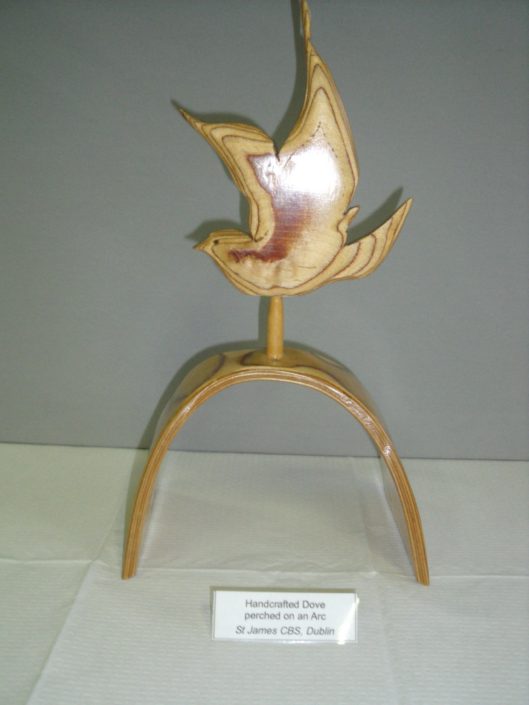
Dove for peace and hope
On the afternoon of Saturday the 15th August 1998 at 3.10pm a car bomb exploded in Market Square Omagh killing 29 people and two unborn children as well as injuring 370 people. It remains the largest loss of life of any single incident in the history of the Northern Ireland troubles. This handcrafted dove perched on an Arc was presented to the people of Omagh with hope for their future from the staff and pupils of St James Street CBS Dublin.
Label written by Deirdre Nugent, Libraries NI.
Label written by Deirdre Nugent, Libraries NI.
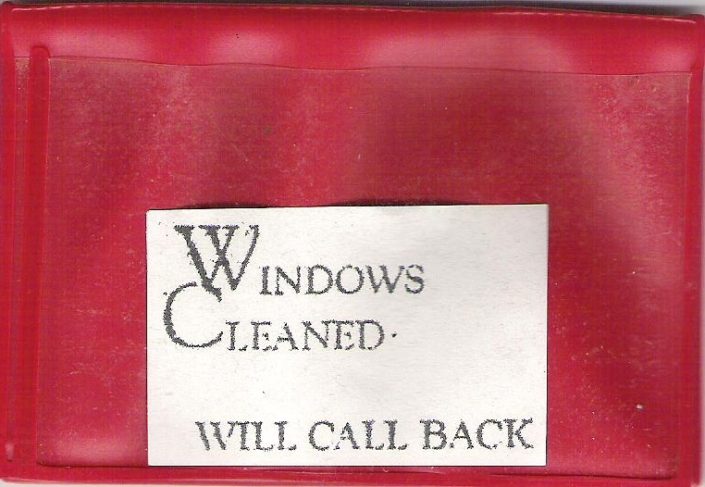
Windows cleaned
Some companies had to account for protection money by putting it through their books, this caused problems when auditors reviewed accounts and looked for receipts for this 'Insurance' cost. One way it was put though was as ‘window cleaning’ - men with a small ladder arrived monthly, collected money, issued a receipt – the windows in the meantime remained dirty!
Label written by Anonymous.
Label written by Anonymous.
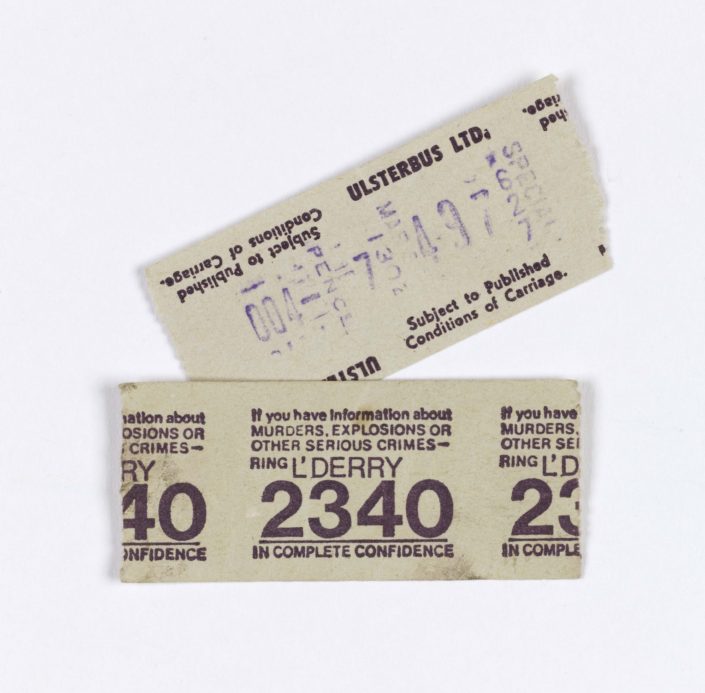
Bus tickets from Belfast and Derry 1973-1974
The bus ticket is the most quintessential everyday object. So commonplace, that most people do not even look at it. You pay your fare and hold the ticket in your hand ready to put it in a bin on getting off the bus; the message on the back un-noticed and unread.
Label written by Peter Moloney, private collector.
Label written by Peter Moloney, private collector.

Pens
All shades of opinion tried to get their message across with embossed pens.
Label written by Peter Moloney, private collector.
Label written by Peter Moloney, private collector.
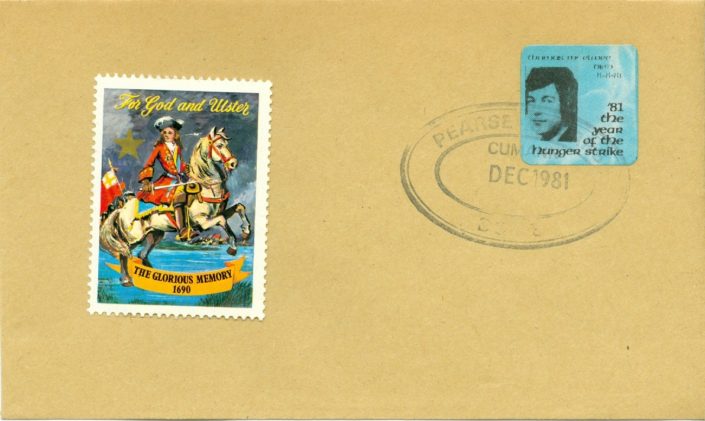
Stamps
Unofficial stamps have a long history in Ireland dating back to the Home Rule crisis of the early 1900's. The stamp of King William was produced in 1984. For a number of years Sinn Fein had organized it's own unofficial postal service in parts the North. They had their own stamps and franks as in this 1981 Derry example.
Label written by Peter Moloney, private collector.
Label written by Peter Moloney, private collector.
No posts found.